
Case Study
PFAS flux-based assessment as an important line of evidence: a multi-source industrial site case study

iFLUX Sampler
Groundwater monitoring
Contaminated industrial site
AECOM
Belgium
Our value
Added value regarding migration risk assessment capabilities
Quantified mass flux variations across vertical profiles and seasonal cycles
Identification of changing groundwater dynamics
Situation
Per- and polyfluoroalkyl substances (PFAS) contamination present unique challenges in environmental site assessment due to their exceptional persistence, high mobility in groundwater, and rapidly evolving regulatory landscape. Conventional investigation approaches based on groundwater concentration snapshots often fail to capture the dynamic nature of contaminant transport, leading to either overly conservative remedial actions or underestimation of both actual and potential risks.
This case study presents a comprehensive investigation of a PFAS-impacted industrial site where multiple contamination sources created overlapping plumes in a complex hydrogeological setting. The detailed soil & groundwater investigation was performed by AECOM and requested iFLUX to support in the flux-based approach.
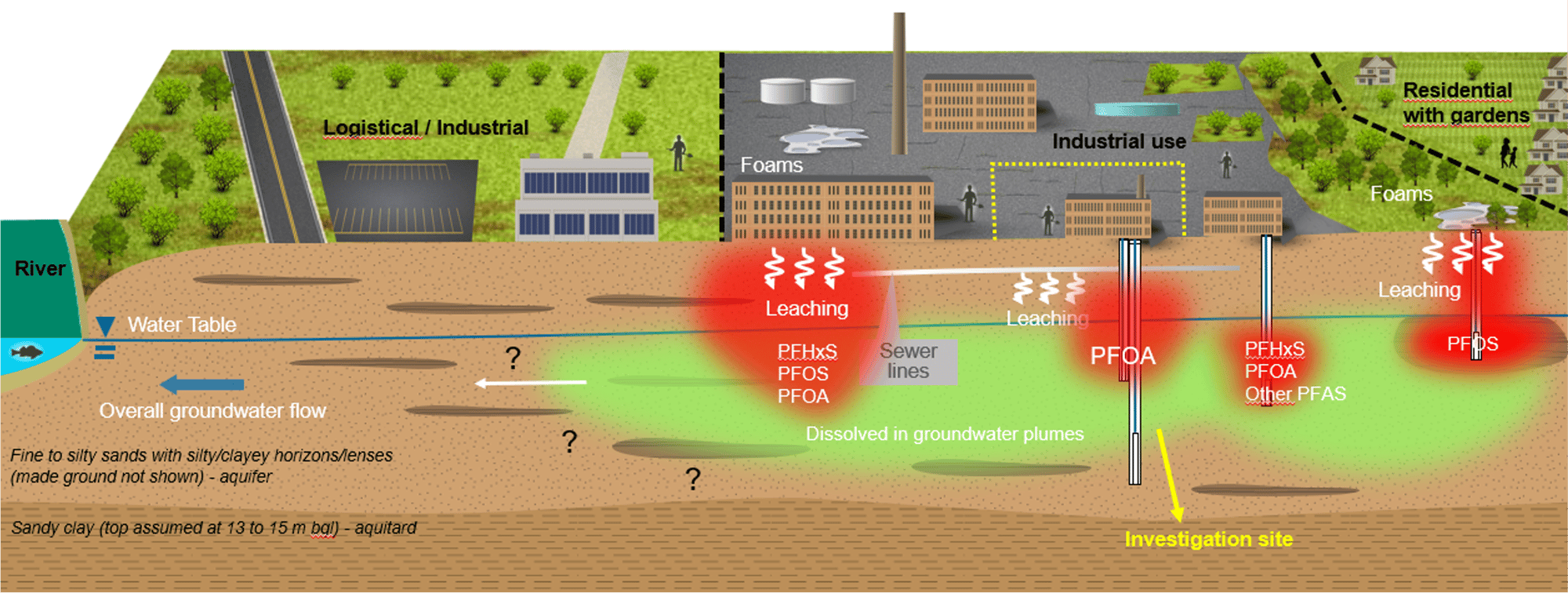
Integrated approach
The investigation utilized an integrated approach combining:
- High-resolution hydraulic conductivity profiling (HPT) by Enissa
- Passive flux sampling technology for direct mass transport quantification by iFLUX
- Seasonal monitoring including a diver campaign, to capture temporal variability by AECOM
- Chemometrics & Forensic analysis to distinguish source contributions by AECOM
- Conservative mass balance modeling for receptor impact assessment by AECOM
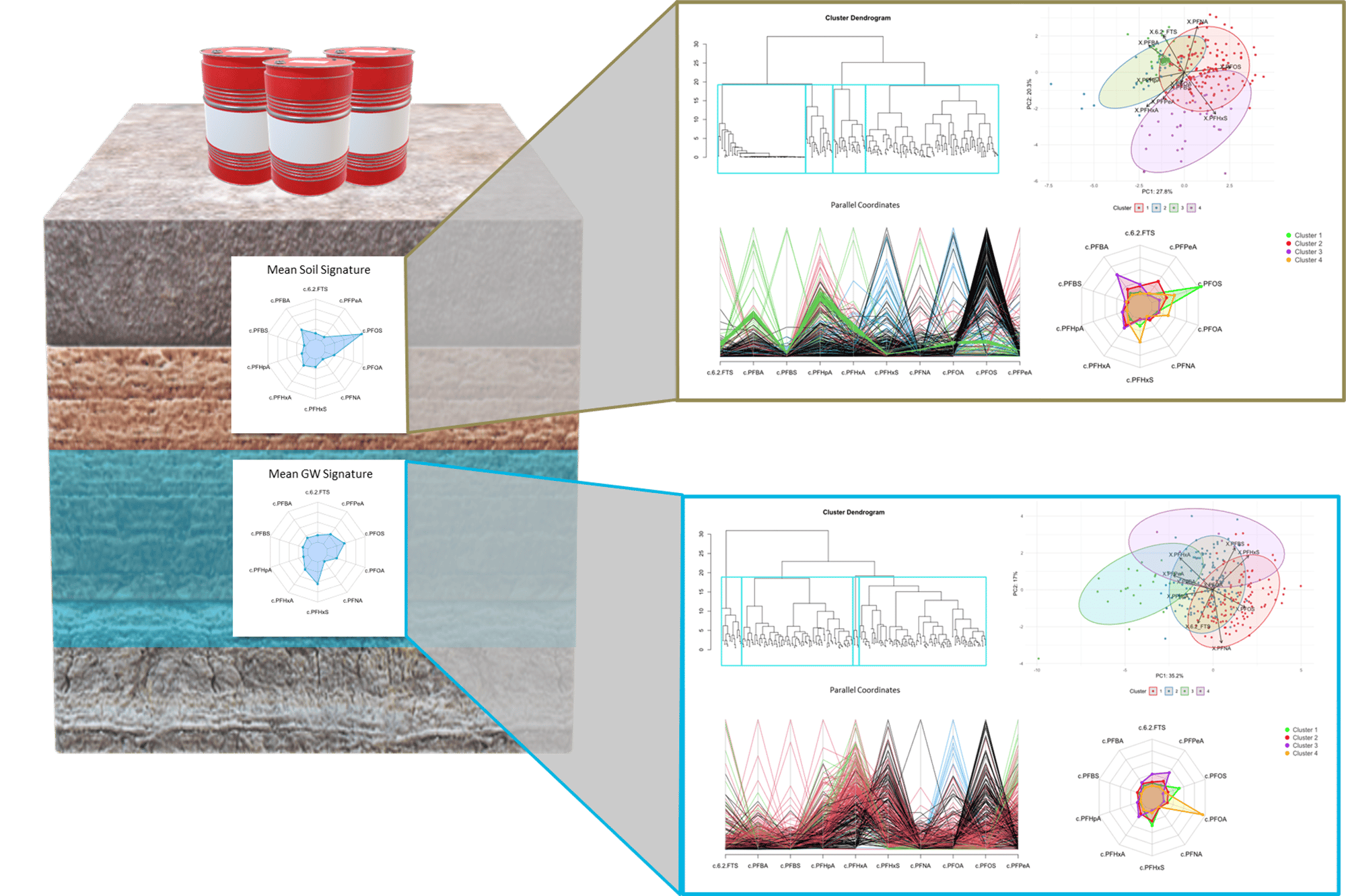
Figure 2: Chemometrics & Forensic analysis on PFAS data in soil & groundwater investigation (source: AECOM)
Study objectives
The primary investigation objectives were to:
- Characterize site-specific PFAS mass flux across vertical groundwater profiles
- Assess seasonal variability in contaminant transport
- Evaluate migration potential to deeper aquifer systems
- Quantify potential mass discharge to downgradient surface water
- Provide additional data and lines of evidence to support risk-based decision making and regulatory discussions
The flux measurement approach
Mass flux measurements quantify the mass of contaminant passing through a defined cross-sectional area per unit time (typically µg/m²/day). Unlike concentration measurements that provide point-in-time snapshots, flux measurements:
- Integrate temporal variations over deployment periods (typically 2-10 weeks for most contaminants, up to 20 weeks for PFAS)
- Directly quantify contaminant mass transport rates
- Account for spatial and temporal variability in groundwater flow
- Enable calculation of actual mass loading to receptors
- Provide improved basis for remediation design and performance monitoring
The relationship between concentration, groundwater flux, and mass flux is:
Mass Flux (J) = Concentration (C) × Groundwater Flux (q)
Where:
- J = contaminant mass flux (mg/m²/day)
- C = contaminant concentration (µg/L)
- q = specific groundwater discharge (m/day)
This relationship highlights that high concentrations do not necessarily translate to high mass transport if groundwater flux is low, and conversely, moderate concentrations in high-flux zones may represent significant contaminant transport.
Results and findings
Vertical migration assessment: Direct flux measurements demonstrated negligible mass transport of PFOA into the deeper Tertiary aquifer (approximately one order of magnitude lower than shallow system), despite elevated shallow PFOA groundwater concentrations of 1,000-10,000 ng/L and PFOA flux increase between MC1 and MC2 from <DL to 1400 µg/m²/day. Mass flux in deeper layer stayed below 50 µg/m²/day. The higher hydraulic conductivity (~7 m/day) in deeper soil layer compensated for the inflow of contaminants from the more shallow layers.
Surface water impact: Conservative worst-case mass balance calculations indicated theoretical river contribution <0.5 ng/L under very conservative assumptions of 100% plume discharge and zero attenuation. This represents a <0.25% increase over background concentrations (~200 ng/L) and falls below analytical reporting limits and regulatory thresholds.
Hydraulic characterization: Site-specific in-situ profiling revealed hydraulic conductivity values up to 3 m/day in shallow Quaternary deposits - 6× higher than regional grain size estimates of ~0.5 m/day. This discrepancy highlighted critical importance of site-specific characterization over regional data for accurate flux assessment.
Seasonal variability: Groundwater level fluctuations of 30-70 cm caused measurable concentration variations, with higher PFAS levels during elevated water table periods when sources in the unsaturated zone contacted groundwater. Time-integrated flux measurements (4-week exposure) captured these dynamics and provided representative annual average transport rates across two seasonal events.
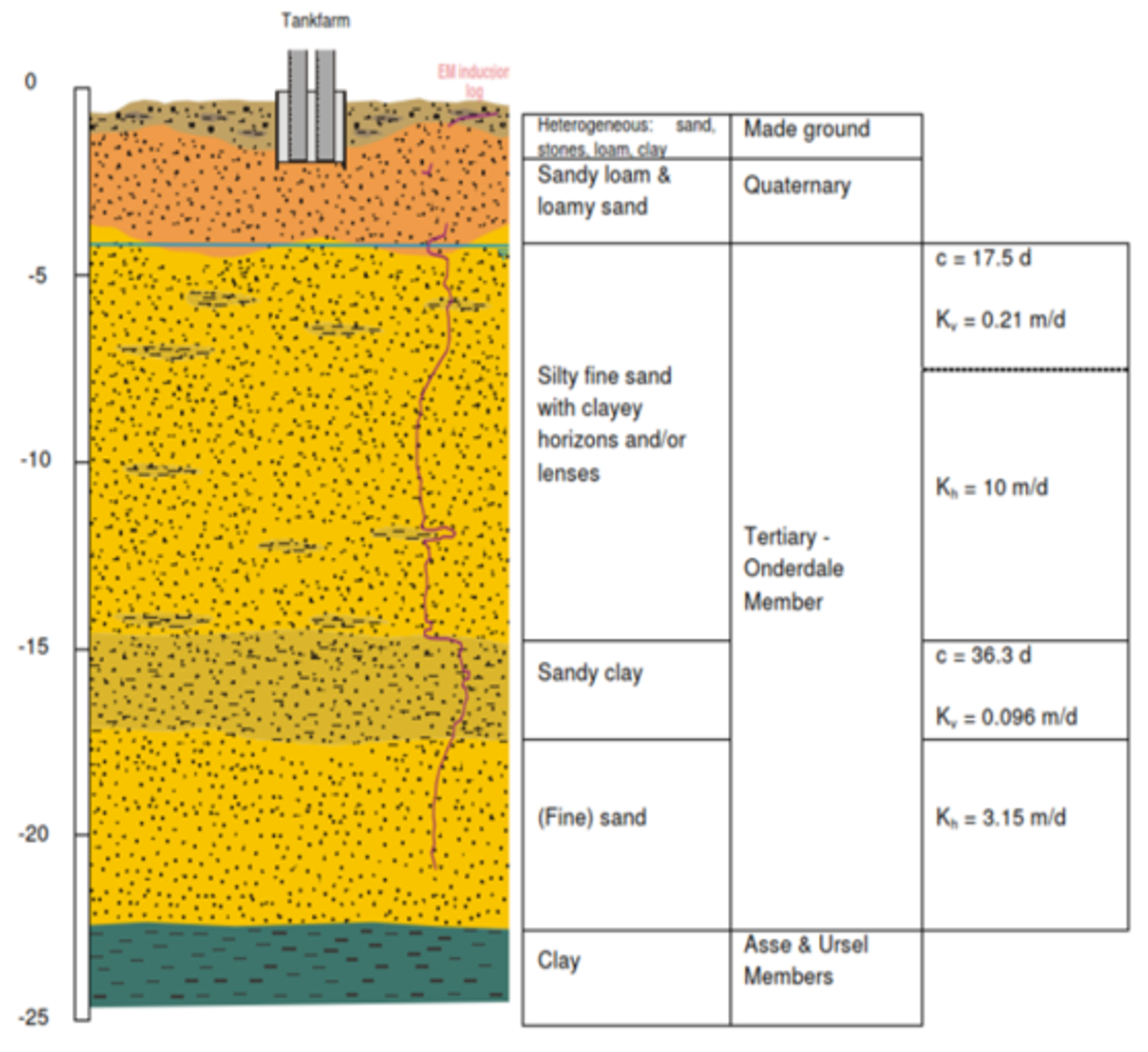
Figure 3: Regional geological and hydrological profile (source: descriptive soil investigation AECOM)
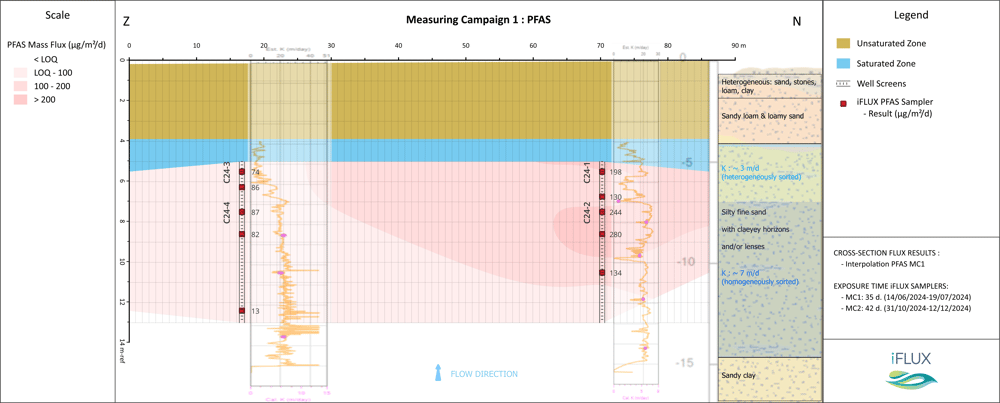
Figure 4: PFAS mass flux along the transect during Measuring Campaign 1 (June–July 2024). Peak flux reached ~280 µg/m²/d near borehole C24-2.
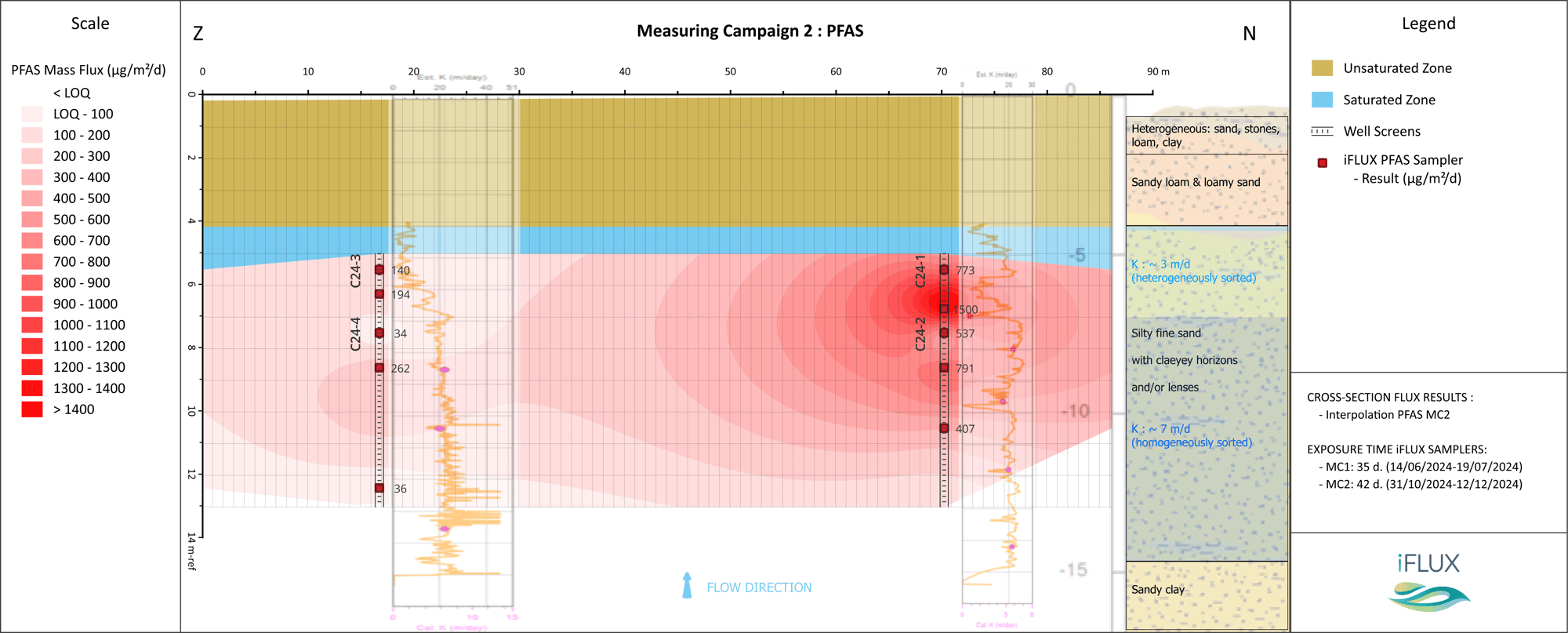
Figure 5: PFAS mass flux along the transect during Measuring Campaign 2 (Oct–Dec 2024). Note the different color scale compared to MC1 : peak flux increased to 1,500 µg/m²/d near borehole C24-2, reflecting seasonal groundwater table rise and increased contact with the unsaturated zone.
Added value flux measurements
The flux-based approach delivered substantial value compared to conventional concentration-only investigations, providing quantitative answers to critical risk assessment questions that traditional methods could not address.
Enhanced Decision-Making Capability: While discrete groundwater sampling identified elevated PFAS concentrations (1,000-10,000 ng/L) in shallow groundwater, these concentration data alone could not definitively determine whether receptor impacts were occurring. Flux measurements directly quantified actual mass transport rates, revealing that despite high concentrations, mass transfer to deeper aquifers was negligible and theoretical river contribution was <0.5 ng/L - below regulatory concern.
Spatial and Temporal Resolution: The vertical profiling strategy identified high-flux zones within the heterogeneous shallow aquifer that would have been missed by conventional single-depth sampling. Time-integrated measurements over 4-week periods captured seasonal variations (30-70 cm groundwater level fluctuations) and provided representative annual average transport rates, eliminating the risk of making decisions based on unrepresentative snapshot measurements.
Cost-Benefit Performance: In this specific case, the flux-based approach, combined with the other lines of evidence, resulted in a NFA, hence significantly reducing future remediation costs. In case remedial actions would have been required, the flux-based approach would have allowed for a better targeted approach, tackling contaminant mass with the highest flux, resulting in reduced remediation costs.
Regulatory Acceptance: The comprehensive multi-line-of-evidence approach, combining flux data with site-specific hydraulics, seasonal monitoring, and conservative mass balance modeling, provided authorities with quantitative data supporting regulatory closure. This reduced client liability.
“On this project, mass‑flux measurements demonstrated that migration to the deeper aquifer was negligible and that no measurable impact to the downgradient river was expected. The flux approach reduced uncertainty, helped to understand the PFAS dynamics and were an added value in discussions with the Authorities. In this specific case this resulted in a No Further Action (NFA).”
— Bram Vanhumbeeck, PFAS Lead Belgium, AECOM
Check out the full webinar on YouTube
See how iFLUX will help your project.
Get in touch to review how the iFLUX Sampler will support your project.